You do not need to decide that every Malta journey will use the same transport. A walkable city day, a south-coast outing and an airport arrival can each have a different best fit. Vrenty Car helps you compare the whole journey, including parking, transfers, luggage and the driver's workload. Start with where you are staying and what you actually plan to do, then decide whether a rental for all, some or none of the trip makes sense.
Begin at your accommodation door
An accommodation name or resort label is too broad for a transport decision. Find the actual entrance, nearby stops and walking routes. A property can be close to a bus route on a map while requiring a steep or awkward walk with luggage. Equally, an apartment described as central can have no practical parking nearby. Ask the property about the details that affect your party rather than relying on a general statement that transport is convenient.
For a car, establish whether parking is reserved, paid, shared or merely available somewhere in surrounding streets. For buses, check the service from the nearest usable stop to the places you want to visit and the return at your intended time. For a passenger ferry, include the walk to its terminal and onward connection. Your starting point determines more than a generic comparison of a bus fare with a daily rental price.
Map only the journeys you expect to make
Write a simple itinerary with overnight base, main destination and any time-sensitive appointment for each day. Separate definite plans from attractive possibilities. A holiday that mainly involves one waterfront and a few urban visits has different transport needs from several days linking scattered locations. Do not hire a car for an entire week solely because one optional excursion looks difficult by bus. Test that excursion separately first.
Group nearby destinations. A plan that returns to the same region repeatedly can make every transport mode feel inefficient. Consider a walking day, a heritage day and a coastal day rather than alternating distant stops. For example, our Mdina and Rabat day trip is built around reaching one area and spending time on foot. Its value does not depend on moving the car between every attraction.
When a car can add real convenience
A car can help when several travellers share a journey, carry equipment or want to connect stops that would otherwise involve inconvenient transfers. It may suit accommodation with confirmed parking and a touring schedule spread beyond one urban area. Flexibility is useful when a coastal activity changes with the weather or a family needs a rest. The benefit is control over the road journey, not freedom from traffic, parking rules or opening hours.
Choose a car that fits the group without adding unnecessary size. Include the boot with all seats occupied and any child restraint or mobility equipment. Transmission matters if the driver is adapting to left-hand traffic. Compare car rental in Malta using those practical requirements and the written conditions. A low price has little value if the vehicle cannot be collected with your documents or payment method, or cannot make a journey essential to the itinerary.
When buses can be the easier option
Buses can be a sensible choice when your planned route has useful connections and the walking stages suit you. They remove the task of driving and finding a parking space, and allow everyone in the group to be a passenger. Use Malta Public Transport's official journey planner for the actual date and time, then check service alerts. A general route map shows coverage; it does not establish that a particular connection fits your evening return.
Look at transfers and waiting as part of the journey, not as surprises after buying a ticket. Check the relevant fare or travel product for a visitor and do not assume a resident or personalised-card benefit applies automatically. Review luggage and accessibility information for your needs. If a connection would be difficult with tired children or heavy bags, consider another mode for that leg while keeping buses for simpler trips later in the holiday.

Passenger ferries solve particular journeys
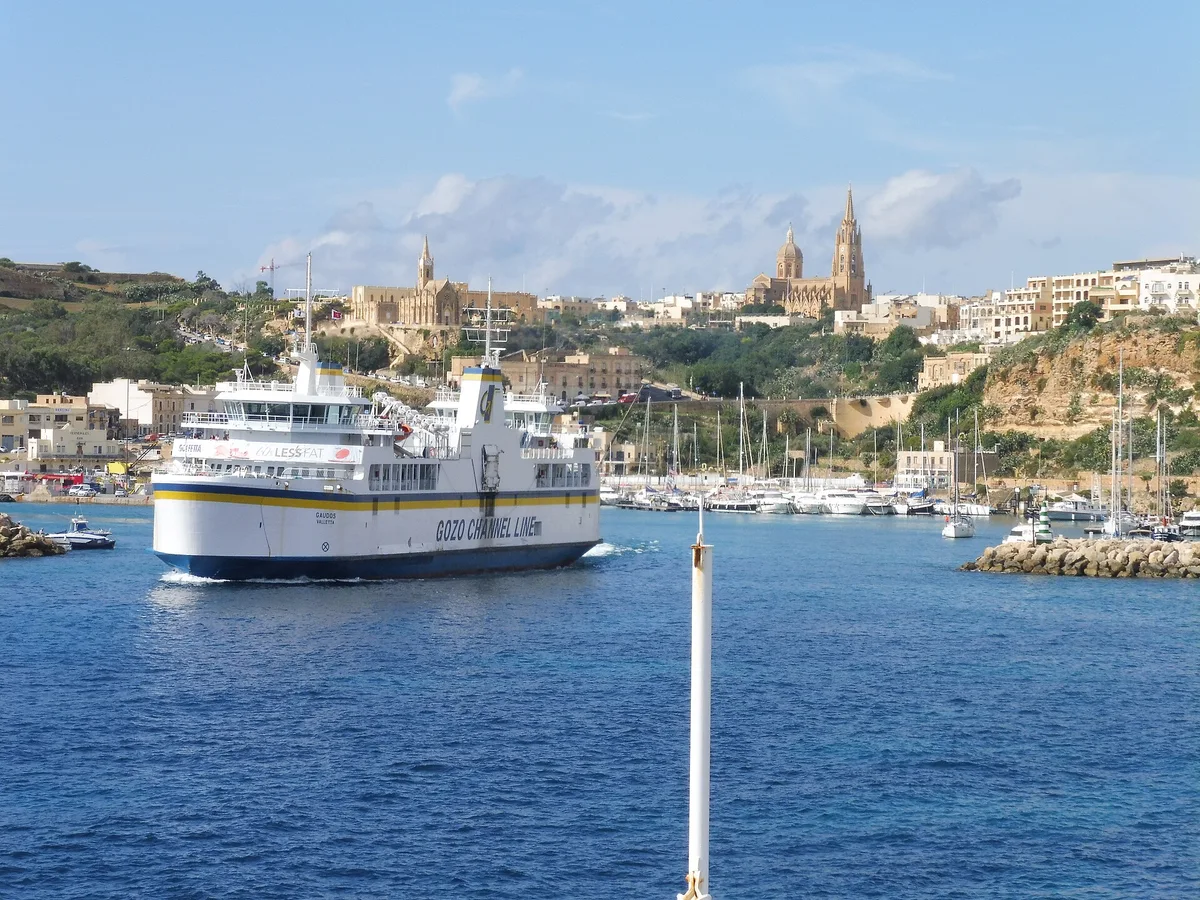
A passenger ferry can be useful when the departure and arrival points align with your day. Compare the walk to the terminal, operating information and onward route as carefully as you would a bus connection. A water crossing may avoid a road journey but remains subject to the operator's schedule and conditions. Keep an alternative for a time-sensitive appointment, and check current notices before relying on a particular departure.
For Gozo, distinguish a passenger trip from taking the rental car. The vehicle crossing requires the appropriate ferry service and the supplier's written permission. The Malta to Gozo ferry guide explains the decision. A passenger journey can suit a focused visit with onward transport arranged, while an approved car may be useful for separated stops or an overnight base. Compare the complete island day rather than only the crossing time.
Compare full costs in separate columns
For a rental, add the booked period, selected extras, any location or time charges, fuel and parking. Keep the security deposit in a separate funds-needed column because it is not necessarily an eventual expense. Include a transfer if you must reach a supplier location away from your accommodation. For public transport, calculate the fares for everyone, any visitor pass and occasional additional transfers. Use current quoted prices for your own dates.
Do not divide one headline daily rental figure by the group size and call the comparison finished. Nor should you compare a whole week's rental with only one bus trip. Use the same itinerary and passengers on both sides. Assign time and effort honestly without pretending they have a universal cash value. A slightly more expensive plan can be worthwhile if it removes a difficult connection, but that is a personal judgement rather than proof of the cheapest option.
| Factor | Car rental | Public transport or passenger service |
|---|---|---|
| Money | Total rental plus operating expenses | All travellers' fares and extra connections |
| Funds temporarily needed | Deposit or card hold if required | Relevant ticket or booking payments |
| Door-to-door time | Drive, park and walk | Walk, wait, travel and transfer |
| Luggage | Usable boot and loading access | Operator limits and carrying between connections |
| Responsibility | Authorised driver and vehicle care | Timetable and connection planning |
A hybrid holiday can work well
Consider leaving the first urban days without a car, then hiring for a group of touring days. Another option is an airport rental covering an initial road trip followed by a return before a city stay. The best sequence depends on available collection locations and transfer effort. Check whether a shorter rental has a different price structure or minimum period; fewer days do not always produce a proportionate saving.
Build the handovers into the itinerary. If collecting at a supplier office means a difficult journey across the island, that effort may outweigh the saving from one fewer rental day. Hotel delivery, one-way returns and airport collection should be assumed only when the offer confirms them. Compare the actual arrangement and total, not an imagined version with free delivery and flexible hours. Keep written confirmation of any location change.

Treat the airport as its own decision
Arrival transport has different needs from a sightseeing day. You may be tired, carry all your luggage and need to reach a check-in at a particular time. A rental can be convenient if the handover is confirmed and the driver is ready, but it adds document checks, payment and inspection after the flight. Another transfer followed by collection later may fit better when arriving late or learning left-hand driving.
For departure, calculate the complete route to the terminal. Returning a car includes refuelling where required and the supplier's handover. A bus or passenger connection requires a timetable and a margin for disruption. Read the Malta airport car rental guide before deciding that hiring automatically simplifies both ends of the trip. The exact collection point and return entrance matter more than an airport label in a search result.
Families and luggage change the comparison
Count what you must carry, not only the number of people. A pushchair, child restraint, beach equipment or mobility aid can influence both car size and the feasibility of transfers. Ask the supplier to confirm required rental extras and inspect them at collection. Check the relevant transport operator's luggage and accessibility arrangements when comparing alternatives. A vehicle with enough seats may still lack the boot space needed for an airport journey.
Think about who handles the luggage while supervising children or assisting another traveller. A short walk between stops can be easy for one adult with a backpack and difficult for the same person carrying several bags. Conversely, once bags are at accommodation, public transport may become much simpler for ordinary days out. Make the decision separately for arrival and sightseeing rather than allowing the heaviest journey to define the entire holiday.
Include the driver's time and comfort
A rental gives the driver responsibilities throughout the trip. Someone must remain ready to drive, understand the agreement, park lawfully and return the car correctly. If only one person is comfortable driving, discuss how that affects the holiday before booking. An additional driver must be approved and eligible under the contract; being a competent driver at home does not automatically authorise someone to share this rental.
If evening plans make driving undesirable, organise another transport option in advance and include it in the budget. A parked rental may still be worth keeping for the next day, but be honest about its cost on unused days. For someone who is anxious about narrow streets, buses or an arranged excursion can be the more enjoyable choice. Convenience includes how the journey feels to the people making it, not just the theoretical ability to stop anywhere.
Plan for ordinary disruption
Each mode has uncertainty. A car can encounter traffic or a full car park; a bus connection can require a wait; a passenger ferry can have an operational change. Choose a backup proportionate to the importance of the journey. A flexible sightseeing stop may simply move to another day. A flight or timed appointment needs more margin and a realistic alternative. Do not build the plan around the last possible connection.
Check the current information again shortly before travel. Save routes and confirmations offline where useful, keep the relevant contact details and carry a way to charge your phone. Avoid making a transport decision solely from an old timetable screenshot or an attractive rental advertisement. Availability and operating arrangements are tied to dates, and a workable plan should be confirmed after accommodation and the main activities are settled.
Make the decision with a short trial itinerary
Choose two representative days and compare them in detail: one local day and one touring day. Include all walking, parking or transfer stages and the complete cost for your group. If the car offers little benefit on the local day but a clear advantage for touring, a mixed plan deserves consideration. If public transport handles both comfortably, there is no need to invent a reason to rent.
Vrenty Car's role is to help you choose a useful rental when it fits, including knowing when fewer rental days may be enough. Keep the final decision tied to confirmed offers and current operator information. The checklist below turns that judgement into a plan you can use without overcomplicating the holiday.
- 1. Mark accommodation, definite visits and time-sensitive journeys.
- 2. Check complete public transport routes for the intended dates.
- 3. Confirm parking and realistic rental handover locations.
- 4. Compare the same passengers, luggage and itinerary costs.
- 5. Choose full hire, short hire or no hire, with an appropriate backup.
Questions & answers
Is a car necessary for every Malta visitor?
No. The answer depends on your base, itinerary and preferences. A walkable urban stay with useful transport connections can work without a rental, while several separated outings may justify one. Compare real journeys and parking rather than deciding from the island's size alone.
Will public transport always be cheaper for a family?
Use current fares and rental quotes for the same complete itinerary. Include every passenger, extras, parking and occasional transfers. Family size and luggage can change the result, and a convenient option may still be worth choosing even when it is not the lowest cash cost.
Can I hire only for sightseeing days?
Yes, compare available offers for the required period and confirm a practical collection and return. Include the transfer needed to reach the supplier. Do not assume a proportional daily saving, free delivery or a different return point unless those details are explicitly included.
Where should I check current bus information?
Use Malta Public Transport's official journey planner, routes and service alerts for your intended dates. Check the applicable visitor ticket and any luggage or accessibility requirements. A general map helps with orientation but does not replace a timed journey and return plan.